They are not going to replace us, we are going to turn into robots
“I’m not a robot, I express myself poorly and you can tell I’m nervous, which proves I’m not a robot”, Luis Montero says. Thinking about robots is basically thinking about us, and that's how the speaker frames the talk. A robot is a mechanical and lively substitute of a human, created to perform a task; a mirror in which we can look at ourselves, or even an extension of what we believe that we could do.
That’s why wondering about robots, and not wondering about humans alike is impossible. Luis explains through real-life examples (people of the Foxconn floor production in China with their serial work), the process of dehumanization of people. He speaks about how we have built a world that can be controlled by machines, and throws a disturbing question to the audience: «Are they going to replace us?»
He immediately answers with a resounding «Yes». On one hand, they will replace us in a direct way through the motor decisions that robots make for exercising and coordination (wild and extremely complicated engineering exercises). On the other hand, and from the moral point of view, robots have the ability to decide, to point and to not fail the shoot at anything that approaches to them (example of army robots).
In this moment of the talk, the speaker rectifies: “they are not going to replace us, we are going to turn into robots”.
—
“Yo no soy un robot, me expreso mal y se nota que estoy nervioso, con lo que lo demuestro, no soy un robot”, comienza diciendo Luis Montero. Pensar en Robot es básicamente pensar sobre nosotros, y así es como el ponente enfoca la charla.
Un robot es un sustituto mecánico y animado de un humano, creado para realizar una tarea, un espejo en el que mirarnos, o incluso una extensión de lo que nosotros creemos que podríamos hacer. Por eso preguntarnos por los robots y no preguntarnos por nosotros mismos es imposible.
Luis nos explica mediante ejemplos reales (las personas de la planta de producción de una fábrica en china con su trabajo serial), el proceso de deshumanización de las personas. Habla de cómo hemos construido un mundo para que pueda ser controlado por las máquinas, y lanza una inquietante pregunta al público, ¿van a sustituirnos?
De manera inmediata contesta con un rotundo «sí». Por un lado, nos sustituirán de una forma directa en cuanto a las decisiones motoras que toman los robots al realizar ejercicios de coordinación (ejercicios de ingeniería salvajes y sumamente complicados). Por otro, y desde el punto de vista moral, los robots tienen la capacidad de decidir apuntar y no fallar al disparar a cualquier cosa que se le acerque (ejemplo de los robots del ejército).
En este momento del discurso el ponente rectifica, «no nos van a sustituir, nos vamos a convertir en robots».
About the speaker
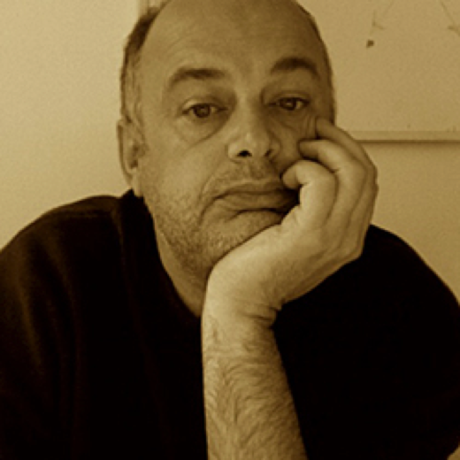
¿Cuanto más dispersa es una biografía, más interesante la vida? Bueno, no sabemos si es así. Ni tampoco si la bio de Luis Montero es lo suficientemente dispersa. Lo único que podemos decir es que lo intenta todos los días.
Nació en el 65. Estudió Publicidad y Filosofía y Letras. Vivió en Madrid, Nueva York, Londres, Fráncfort y Marrakech. Trabajó como Director Creativo en Tiempo/BBDO, como Director de Planificación Estratégica y Director de Usabilidad en Teknoland, fundó The Cocktail y ahora es feliz en Soulsight. Participó en la primera antología sobre el futuro de las interfaces. Publicó los ensayos Las políticas del diseño y Sobre eso que hoy llaman educación. Y las novelas sobre la construcción de la identidad: Artrópodos, Feliz Año Nuevo y Clon. Además, colaboró con El País, investigando sobre economía política; y con El Economista, sobre tecnología. Y, últimamente, colabora con la revista El Estado Mental. También da clases de posgrado, sobre tecnología y semiótica. Y, a veces, da charlas, últimamente sobre dos temas relacionados: Las políticas del diseño y El Exocerebro.
Y, lo más importante, tiene dos hijas.
Favorite quotes from this talk See all
Al final, cuando estamos construyendo un robot, estamos construyendo un espejo.
Robota, sabéis que viene de trabajo, robota es labora en checo.
La idea de realizar una tarea es por la que nacen los robots, y por lo que evolucionan es porque no sólo desarrollan tareas si no que toman decisiones.
El robot es un sustituto animado y mecánico de una persona o de un humano para la recepción de una tarea.
Los robots de propósito general son los robots que tienden a ser como nosotros, es decir, nosotros somos una máquina de propósito general que somos capaces de realizar muchas actividades diferentes en entornos diferentes.
Photos from this talk See all

Hosted by
Soulsight
Salustiano Olózaga, 5 - 3º derecha
Madrid, Madrid Spain 28001
Date
Partners
Soulsight. Design Strategy
Pretty Nice Cakes
Yorokobu