
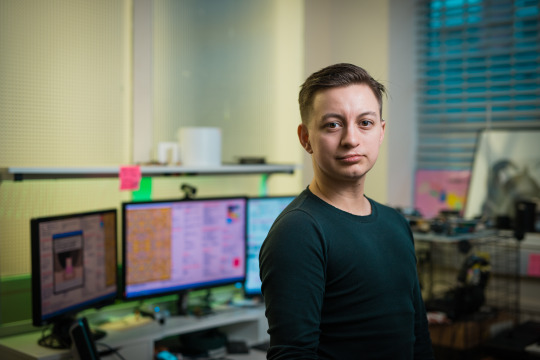
In September we were joined by Zoyander Street, an artist and researcher. They have been working in indie video games for more than a decade but their practice also involves other forms of media art and (mis)uses of technology.
Studying history and foreign languages, they became frustrated with the idea of linear text and putting one idea after another. During an internship in Japan, Zoyander found interest in objects and the story behind them. Often there was much more interest to the individual object, beyond the general history that surrounded the time it was from. From this, they realised the limitations of the linear. They wanted to allow messy things to stay messy and began to research interactive and tactile forms of expression to surface ambiguity.
“There are millions of ways to be a person.”
Zoyander used interviews with trans people to create media which showed the need for society to be flexible. Through inviting trans people across the world to share their experiences, from those struggling to access the proper healthcare they need to British trans people who are still unable to self-define their gender Zoyander used art to show the spectrums that exist in society, and that goes way beyond gender.
During their masters at the V&A, Zoyander started to develop custom hardware for festivals, galleries, and museums. And with that came an interest in creating lo-fi glitchy games, led by Zoyander’s ethnographic and historical research.
“Anybody can make a video game.”In 2017, Zoyander made Skeleton in a Beret, a film about indie games and the people who make them. The documentary moved away from the mainstream to tell different stories and experiences of gaming.
In Skeleton in a Beret, two trans people talk about how they have actively used videogames as part of how they explore not just their gender, but their skills, self-confidence, and self-expression.
Beyond films, Zoyander likes to work with ‘toxic garbage’. The garbage being old computers often destined for landfill and the toxicity from the societal issues that inspire their work. By doing something different with traumatic memories or experiences, Zoyander uses their practice – a combination of research, art and recycling, to process things that are toxic in culture and society.Photo credit: Mark Howe