An interview with Philipp Refior
CM Munich: You have been presenting at CM twice – once on the topic of Tradition (2018) and more recently on the Theme of Design. You seemed pretty passionate about both of these topics, and I was wondering how they are connected for you.
Philipp Refior: I am personally really fascinated – probably due to my background as a designer who has worked in 3 very distinct cultural environments – by how creativity is leveraged in different cultures. Everyone agrees that creativity is more important than ever to create an adaptable organization that is resilient and future-proof. However, largely depending on the cultural background – there are different approaches to how to leverage creativity.
CMM: Could you name some examples?
P.R.: Yes, it is my experience that in more risk-averse cultures, such as Germany or Japan where I worked, there is a very strong – sometimes unhealthy – focus on process, while in cultures that are more open to risk there is less spotlight on tools and processes and more focus on the outcome.
For example, during my time at 3M – an American company - I was really impressed with the 15% rule. This rule allows every employee to take 15% of their time to tinker around with personal ideas that they can then submit to be funded by the company for further development. By the way, this approach today is often referred to in connection with Google, but it was actually 3M who came up with it.
CMM: And how is this approach connected to culture in your eyes?
P.R.: Giving everyone time to be creative is obviously taking a risk. It is very probable that people will work on ideas that will go nowhere – or maybe not come up with ideas at all. But by spreading the risk so widely, you are actually very likely to get rewarded in the end. To me, this “venture capital approach” is very much driven by a culture that is comfortable with risk.
The approach of a risk-averse culture is to micromanage – or even outsource – the process of developing new ideas. And this is often counterproductive to the very nature of creativity. Creativity requires a certain amount of freedom and ownership. So, telling somebody how to be creative can quickly backfire.
CMM: That sounds like you would recommend everybody to take the 3M approach and give people some free time to develop their own ideas?
P.R.: Not necessarily. For the 3M approach to be successful you need a conducive environment.
We talk about psychological safety in this context: knowing that you can make mistakes without fearing harsh consequences. You also need the right incentives; you need a system that helps finance promising ideas – and you need an organization that promotes networking. Some of these factors are again highly dependent on culture.
That’s why there isn’t a one-fits-all approach to innovation – every organization has a different culture. With my company, The Deep Bench, we are helping companies to find the right approach to innovate for their organization.
CMM: Are there any general recommendations you could give in terms of leveraging creativity?
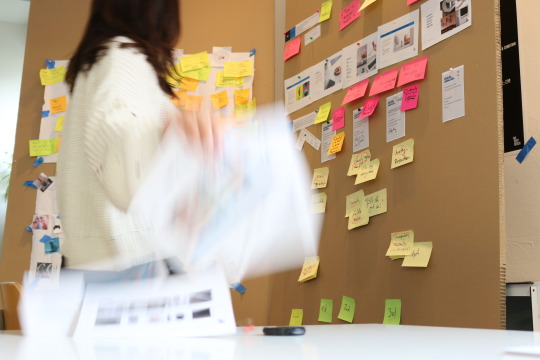
P.R.: Well, every case is different, but besides the issue of culture, I would break innovation into 3 large blocks: opportunities (where are potential fields for new ideas?), solutions (what could be potential offers?), and integration (how do we prioritize and integrate ideas into our processes?). Over and over again, we see a strong focus on “solutions” but less concern for opportunities and integration. People believe that once you crack the secret of developing ideas, the rest will be a piece of cake. But that is not true. Promising ideas are built on great input, great research. And ideas are only valuable if you have a plan in place how to bring them to life. These are things where we see generally not enough focus.
CMM: And how does your design background play into helping companies become more innovative?
P.R.: A lot of the aspects that are required for an environment conducive to innovation can be found in any design-driven organization, where creativity is at the heart of the business model. That’s why we designers have a lot to teach here.