← Load previous
image

Marirosa Iannelli is the president of Water Grabbing Observatory, an environmental designer specializing in international cooperation, water management, and communication. She carries out a European H2020 research doctorate with a project on climate change and resource governance between Africa and South America, focusing on water’s human rights. Additionally, Marirosa collaborates with Amref Health Africa and Italian Climate Network following advocacy and education projects; as an expert, she follows the UN conferences on climate and the European Commission’s work on the environment and desertification. Furthermore, she is co-author of Water Grabbing, the Hidden Water Wars in the 21st Century, and Geopolitical Atlas of Water. Activist, feminist, and cyclist, passionate about photography and visual arts, for years, she has been traveling the world for work and to observe it through the light that passes through the camera diaphragm.

For more information visit: www.watergrabbing.com

Don’t miss our speaker’s event on Saturday  November 28th at 10a.m.

Register ➜ https://creativemornings.com/talks/marirosa-iannelli/

Marirosa Iannelli is the president of Water Grabbing Observatory, an environmental designer specializing in international cooperation, water management, and communication. She carries out a European H2020 research doctorate with a project on climate change and resource governance between Africa and South America, focusing on water’s human rights. Additionally, Marirosa collaborates with Amref Health Africa and Italian Climate Network following advocacy and education projects; as an expert, she follows the UN conferences on climate and the European Commission’s work on the environment and desertification. Furthermore, she is co-author of Water Grabbing, the Hidden Water Wars in the 21st Century, and Geopolitical Atlas of Water. Activist, feminist, and cyclist, passionate about photography and visual arts, for years, she has been traveling the world for work and to observe it through the light that passes through the camera diaphragm.

For more information visit: www.watergrabbing.com

Don’t miss our speaker’s event on Saturday  November 28th at 10a.m. 

Register ➜ https://creativemornings.com/talks/marirosa-iannelli/

image

Photo by Roberto Cavalli


    Acting transformations by detonating differences

Flavia Tommasini was born in 1977 in the province of Pordenone. For twenty-four years, she has lived in Bologna, the city she owns chosen, of which she is viscerally in love with and in which she graduated in Contemporary History. Flavia is an activist of the TPO, where she has been involved in producing cultural events and Artistic direction for seventeen years. She had media activism experiences, helping to found the experiment Radio Kairos Bologna, of which she was the director. She is one of the co-founders of the project CHEAP, which deals with street poster art and public art. As a free-lance cultural worker, her investigation territory is the relationship between culture, art, communication, and political activism.

Don’t miss the date and join us! 


Register to the event: 

https://creativemornings.com/talks/flavia-tommasini

image

After a long pause this summer, we are ready to start again, and we do it with Spectrum , which is September’s theme . 

The Spectrum we will observe will be about communication needs. Everyone can be placed in one determined point, a specific gradation of a spectrum, also concerning language and communication. There is no problem for most of us; however, some people are in certain areas of this Spectrum where communicating becomes very complicated. There are languages ​​designed to help these people express themselves effectively and satisfactorily. They are very simple graphic symbol systems. At first glance, they can be confusing, a bit like all unknown languages, but once inside, everything becomes easier. The first system of this type dates back to 1949 and is called Blissymbolics, named after its creator, Charles K. Bliss. From his work, then, several others have come. All these languages ​​are called Augmentative and Alternative Communication (AAC) systems. We will discover them with Francesco Ganzaroli, who has been studying them for many years. He will show them to us on Saturday, 26 September at 10:00 am on our Youtube channel. His talk is entitled, “The image I want to tell you”.

Francesco Ganzaroli is a pedagogue, expert in Augmentative and Alternative Communication and Assistive Technologies. He also is a specialized support teacher, adjunct professor at the University of Bologna, and teacher at the AAC Master at the LUMSA University of Rome. And last but not least, Ganzaroli is a member of the board of directors of the NGO IBO-ITALIA, member of ISAAC Italy, an association that deals with the research development of the Augmentative Communication approach in Italy.

Blissymbolics
Charles K. Bliss was a Jew on the run from the Nazis. He understood that to obtain peace, it is necessary to break down brick barriers, both metaphorical and linguistic. His Blissymbolics, created to be a universal language, unexpectedly also laid the foundations for its author to develop Augmentative and Alternative Communication tools, which since the 1970s have helped people with complex communication needs to express themselves.

If you want to know more about this interesting subject you can watch the full interview with Francesco Ganzaroli by clicking here:  https://www.youtube.com/watch?v=vnOqUtdcBWc&feature=youtu.be 

Manca poco al nuovo evento a tema insecure! 

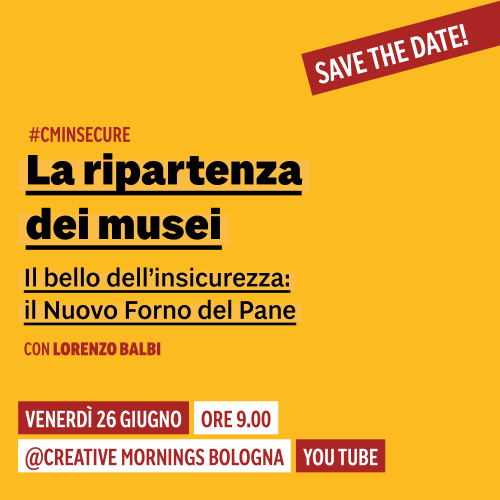
VenerdÏ 26 alle ore 9:00 sul nostro canale Youtube, Lorenzo Balbi direttore artistico del MAMbo - Museo d'Arte Moderna di Bologna ci racconterà del Nuovo Forno del Pane. 

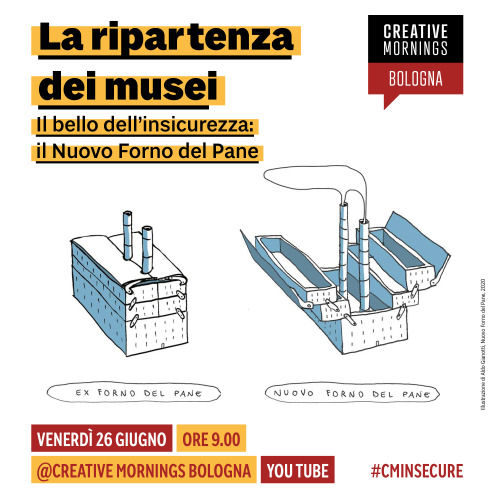
Il progetto che trasforma la Sala delle Ciminiere del MAMbo in un spazio per ospitare una comunitĂ  creativa in cui l'arte diventa pane per la mente. Il museo si trasforma in forno, incubatore della creativitĂ , che Bologna offre ai suoi artisti per ripartire e per rinascere dopo l'emergenza Coronavirus.

Vi presentiamo Lorenzo Balbi lo speaker di giugno che potrete seguire nell'evento CM BOF: La ripartenza dei musei: il bello dell'insicurezza del 26 giugno alle ore 9:00, in diretta streaming sul nostro canale Youtube.

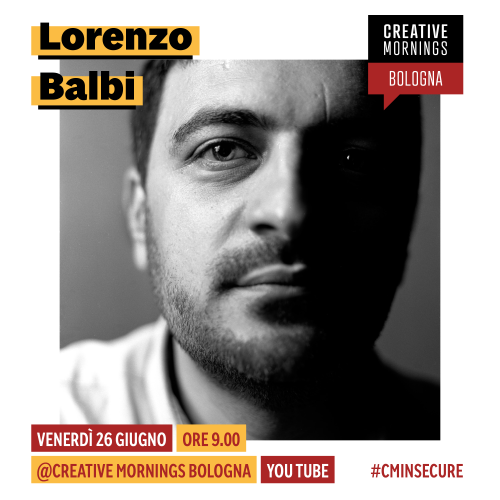
Ma chi è Lorenzo Balbi?

Lorenzo Balbi è il direttore artistico del MAMbo - Museo d'Arte Moderna di Bologna e Responsabile dell'Area Arte Moderna e Contemporanea dell’ Istituzione Bologna Musei. Dal 2018 ha assunto la direzione artistica di ART CITY Bologna, rassegna di eventi promossa in occasione di @artefiera; è membro del consiglio direttivo di AMACI - Associazione dei Musei d'Arte Contemporanea Italiani e del coordinamento del Forum dell'arte contemporanea italiana.

Quale sarĂ  il futuro dei luoghi della cultura?

Ne parleremo online sul nostro canale YouTube il 26/06 con Lorenzo Balbi direttore artistico del Mambo Bologna. Per il suo speech a tema insecure, ci racconterà come il museo ha utilizzato questo periodo d´insicurezza, per rivedere i suoi spazi e lanciare un nuovo progetto per gli artisti della città: il Forno del Pane. 

Il tema del mese è #insecure. 

Ci stiamo interrogando su come il mondo dell'arte si stia adattando a questo momento d’insicurezza. Quale sarà il ruolo dei luoghi dell'arte e della cultura nei prossimi mesi? 

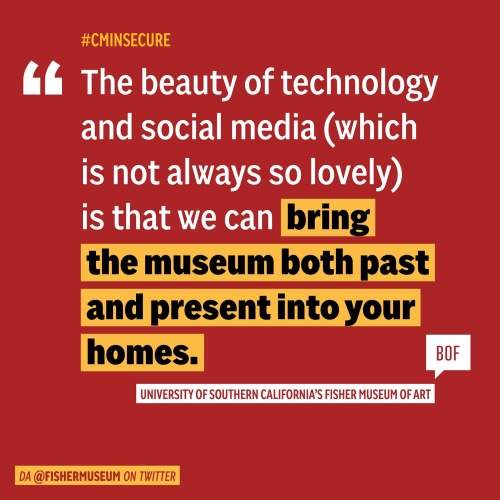
Citiamo un pensiero espresso dal USC Fisher Museum of Arts sul proprio account Twitter e riportato da questo interessante articolo di Artsy (https://www.artsy.net/article/artsy-editorial-museums-curators-artists-find-innovative-solutions-showing-art-pandemic). Volete saperne di piĂš? Allora seguite le iniziative di questo mese a tema #insecure!

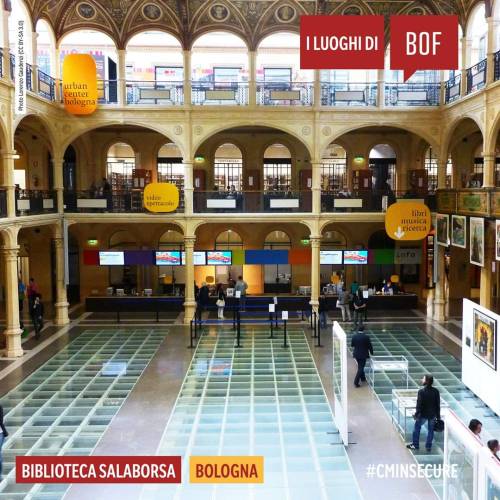
I LUOGHI DI BOF

In tempi incerti non c'è luogo piÚ adatto di una biblioteca per fugare le proprie insicurezze. Un libro può rispondere alle nostre domande, oppure donarci un mondo fantastico in cui rifugiarci.


La Biblioteca Salaborsa, la piÚ famosa di Bologna è stata inaugurata nel 1884 e negli anni ha piÚ volte cambiato destinazione d'uso, trasformandosi in orto botanico, poste, palazzetto dello sport per poi tornare ad essere una biblioteca nel 1926.Grazie al pavimento di vetro potete ammirare un'edificio di epoca romana.

more