Pennylane Shen (virtual)
• –
About the speaker
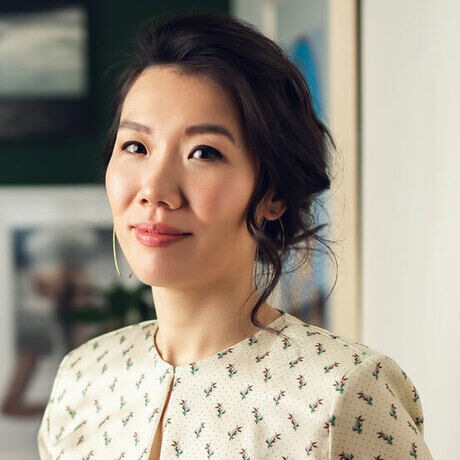
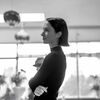
August's global theme is 'CRITICAL' and we are thrilled to welcome artist consultant, curator and educator, Pennylane Shen.
Since 2006, her company Dazed and Confucius has offered one-on-one consultations to over 1000 artists each year in addition to business development seminars to audiences worldwide. While Dazed and Confucius caters to artists' needs such as marketing and career support, what sets them apart from other artist consultants is their core philosophy. Dazed and Confucius prioritizes strong concept and identity building and attention to the quality artwork itself first and foremost.
Pennylane holds a Master’s Degree in Visual Culture Theory from New York University and has lectured at various forums throughout Canada, the US and the UK. Her publications discuss the politics of representation, race and fine art. For more than a decade, Pennylane has worked in commercial galleries throughout Canada and New York.
Among her curation, speaking and education projects are the TedX, NYC Crit Club, The I Like Your Work Podcast, The University of the Arts London and The Vancouver Mural Festival. An avid supporter of art and wellness, she sits on the board for the Vancouver General Hospital and UBC Foundation, collecting notable art pieces for hospital walls.
How do you define creativity and apply it in your life and career?
For as long as I can remember I’ve been interested in the making of things—new materials, and how nothing can suddenly become something. It was while pursuing a degree in Visual Culture Theory that I realized I liked talking about art more than I liked making it.
My career involves consistent creative problem-solving. Every artist has a different set of challenges given their different backgrounds, geographical locations, social and cultural contexts. Navigating these with my artist clients takes a tremendous amount of troubleshooting to find creative solutions.
Where do you find your best creative inspiration or energy?
My inspiration comes from looking at and reading about art. Luckily, my line of work acts day-to-day as a positive feedback loop. The more art I see and speak about, the better equipped I am to assess and comment on it. But also, the more I see, the more there is to get excited about.
On the other side of the coin, though, anger can be inspiring. Funny enough, I find the things you feel angry about are often the things you also care most about. Energy comes from anger, or perhaps another word for it is passion. Figure out what you care about, and let it make you angry.
What’s one piece of creative advice or a tip you wish you’d known as a young person?
Buy Bitcoin NOW. Just kidding. As a young person I wish I had known there were vocational options other than those deemed societally acceptable or approved by family. If only someone told me there were things out there that are hybrids of my interests and skills. Maybe then I wouldn’t have struggled so hard to fit into a box that wasn’t made for me.
Who (living or dead) would you most enjoy hearing speak at CreativeMornings?
Susan Sontag is the first to come to mind. I feel I came into really embracing her writing and theory just before she passed away and missed the window where it was possible to hear her speak live. Controversial a figure as she was, she was a huge influence on my younger self. I think about her from time and time and revisit old texts, which bring me back to a time when her words lit a fire within me – one that has been tempered, wisely so, but one that I long for nonetheless from time to time.
What practises, rituals, or habits contribute to your creative work?
From an early age I created and kept an Art Bucket List—a list of works I wanted to see before I died. Continuing to add and cross pieces off this list has fueled my fascination with art and its power to impact us as individuals and as a culture. I recently did a TedX talk about four of the artworks on my list and what it felt like to finally see them and reflect on how my understanding—of both the pieces and myself—had developed over time.
What’s your one guilty creative indulgence?
I like to make miniature comfort foods out of polymer clay. Ramen, mac ‘n cheese, poutine. It takes forever and no one ever sees them—so definitely a guilty pleasure!
What fact about you would surprise people?
People are always surprised when they find out I’m quite nice during a one-on-one consultation. For some reason, I have a bit of reputation for being a no-nonsense, straight-shooting, hard-ass when it comes to critiques. Now yes, some people have been known to cry during a consult; however not because I’ve been mean! It’s that talking about your art and practice can be emotional.
So, this has led to a bit of a “reputation preceding me” situation which nearly always results in clients being pleasantly shocked that I am quite affable and not the soulless, militant analyst they’ve heard so much about.
What is the one movie or book every creative must see/read?
Practices of Looking by Marita Sturken and Lisa Cartwright. It is an introduction to Visual Culture as well as a guide to how we use images to make meaning.
What’s the craziest thing you’ve ever done?
In New York, I unknowingly lived directly below a dead body for well over a year. In retrospect, there were many signs.
What keeps you awake at night?
A shorter list would be: what doesn’t? Besides the obvious—the state of the world, the persistence of systemic racism, growing fears about mortality, the status of murder hornets…—there’s also the ever-present cacophony of my partner’s buzzsaw snoring which I have fittingly named his “sky screams.”
What myths about creativity would you like to set straight?
The myth of genius persists, unfortunately. We want to believe creativity is all about inspiration—that it should just flow right out of us. The truth, though, is that it’s all about putting the work in, being open-minded, and doing your research.

Note: This event is in person, but if you would like to attend online (via Zoom), please click here to register for the virtual event.
January's global theme is 'SANCTUARY' and we are excited to invite Filipino-Canadian Francis Arevalo, an artist, producer, founder and manager at UWIDO, and mental health advocate.
A multi-hyphenate from Vancouver, Arevalo's work in the music industry is informed by his previous work as Music Program Coordinator at Creative BC and Board Director at Music BC. As a hip-hop artist, Francis writes to uplift, inspire, and energize himself and his communities. He is known for his personal storytelling, thoughtful messages, and colourful production.
Arevalo's production highlights include co-producing Desirée Dawson's JUNO-nominated EP Meet You At The Light (2021), producing and co-writing Mikey Jose's Wait (2020), and his own artist catalogue. Francis released the Threes & Frees EP in November 2022, as a teaser for his upcoming debut album HEATCHECK! for release April 27 2023.
We asked Francis a handful of probing questions to give us a deeper glimpse into their life and relationship with creativity:
How do you define creativity and apply it in your life and career?
I find creativity to be nebulous and hard to define. For me, creativity arises from the intersection of imagination, expression, problem-solving, play, work, experience, environment, evolution and liberation. It connects the space between my personal and the collective, what's inside me with what's beyond me.
Where do you find your best creative inspiration or energy?
I don't believe there is such a thing as "best" creative inspiration or energy, because I don't put ideas into a hierarchy or relate to them in a binary good or bad. There are just ideas, and circumstance and personal/collective need determine the usefulness, appropriateness, and potential of them. I can more easily think of circumstances in which I most reliably receive or come up with novel ideas or progress on something I'm thinking about: long walks, most often and ideally just before sunrise. There is something powerful for me in that space in the morning before the day becomes a day and the rest of the world starts needing things from me. The early morning is my time for me and my ideas, feelings, wants, and turmoils to have the space to be full. Physical movement the mental, emotional and spiritual movement. Timing my walk to end just after sunrise gives me a sense that I've made progress and I almost always end up somewhere new with an idea that I wouldn't have gotten to otherwise.
What’s one piece of creative advice or a tip you wish you’d known as a young person?
Learn how much sleep you need to feel well. As someone living with bipolar disorder, I have a complicated relationship between sleep and creativity, but overall, I wish I slept more when I was younger. It takes a certain capacity for me to properly cultivate my ideas, and I need to be rested to do that work.
Who (living or dead) would you most enjoy hearing speak at CreativeMornings?
My creative peers who don't often speak or present about their works in this way.
Local partners
Additional details
This event is a VIRTUAL EDITION of the in person event happening at SFU Woodward’s All registered attendees will receive a Zoom link in a confirmation email and a reminder email close to the date. (🚩NOTE: If you don’t see any emails from us, be sure to check your spam or junkmail folder.)
If you would like to attend the IN PERSON event, please register here: https://creativemornings.com/talkspennylane-shen