Shock, at the end of the day, is that catastrophic risk that’s right around the corner.
Esteban starts his talk comparing shock with what’s happening at the center of today’s organizations. Shock, at the end of the day, is that catastrophic risk that’s right around the corner. In the same way that happened with the financial crisis where the message was “we either do something or we go down”.
The state of shock that terrorism produces, the food crisis, the crisis in the companies due to disrupted markets. The risk chance is shaping the environment, which has its advantages and its disadvantages.
In his own words: “In my prior book, The End of the Middle Class, I anticipated all this. And what we are living today is also a change in culture. The Cinema, TV, Theater… are all industries where creativity entails a risk, because you never know what’s going to happen. The Culture industry has been designed around this uncertainty: what will the next success be?”
Not knowing this, in the 20s they invited the public to the Publix Cinema, where they had AC, without people knowing what was going to be projected. This way, they ensured benefits beforehand.
What happened is that the efforts were built around a network, concentrating the chain. A network where the raw material is Talent.
Talent does not arise from rigidity. The Rock & Roll industry gives us some clues about it, because it entailed a departure from the social order. On the one hand, you had the established stars, and, on the other, they initiated a search for new talent. In this way, the industry turned into a succession of constant talent renovation with a more of less ephemeral success.
All this ideas that originated in the Culture industry together with their management style was infused into all other industries and companies in order to transform them. The 80’s gurus and consultants assumed chaos as “the new normal”. Companies were seen as giant “elephants trying to graciously dance” and the focus was placed in trying to empower employees to transform leadership, learn to work in teams, etc.
What has happened in the innovation environment is that we have lost security. Now we talk a lot about how failure is good, etc. And there is an explicit discourse versus the real discourse.
Why isn’t there real innovation?
Because companies have been organized based on controlling processes. In a risk context we tend to make the simplest decisions because those are the one that provide us security. It’s the Inda and Marhuenda style, reality is reduced with absolute visions.
Now there is lots of interest about an image, about going fast. It’s necessary to provide an image of someone who cares for his health, otherwise you are obsolete. If you don’t do running, in the enterprise world, you’re nobody. Before, knowledge and experience was valued, now it’s is less and less valued. So, even though organizations keep doing the same, the important thing is to seem as if they are changing, to portray the image of being changing.
The business world cannot be instantly transformed. We need to improve what’s being done and take it to different contexts. But companies are not interested in ideas, they are interested in trends. One example of this is why the sales ladies are all hot. It doesn’t matter if they are nice or experimented as long as they are hot, as long as they represent the aspirational of the brand image.
And why is this happening? Why are they still more worried about portraying an image of being changing that changing for real? The answer is Chaos.
The shortcut is the easiest answer. The image. Because if you change processes, it’s a hard thing to do and it’s likely that no one will notice.
So we see all CEOs more worried about running than about really working hard. Control is more valued that initiative. And, what do they do? Measuring. Companies need to control processes, so they measure aspects not really related with the content of the task, but rather to cost effectiveness.
Today’s message is: “if we don’t change it will be a disaster”, which takes us into an irrational, pressured and senseless decision-making.
Maybe it’s time to do things right. In order to transform companies for real, we need time and a safety net to go back to. If you don’t have that, you have very few chances of truly growing. It’s like the kid who looks back to ensure that his mom is right there supporting him in the distance in case he falls.
—————————
Esteban comienza su charla equiparando el shock como lo que está ocurriendo en el centro de la empresa. El shock, al fin y al cabo, es ese riesgo catastrófico que está a la vuelta de la esquina. Del mismo modo que ocurrió con la crisis financiera en la que el mensaje era “o tomamos medidas o nos vamos abajo”.
El estado de shock que produce también el terrorismo, la crisis alimenticia, la crisis en las empresas debido a la constante disrupción en los mercados. La posibilidad de riesgo teje el entorno, lo cual tiene unas ventajas y unas desventajas.
En su libro anterior, El fin de la clase media, ya lo anticipaba. Y hoy, lo que vivimos es un cambio en la cultura también. El cine, la televisión, el teatro… son industrias donde la creatividad conlleva riesgo, porque nunca se sabe lo que va a pasar. La industria de la cultura se ha diseñado alrededor de esta incertidumbre: ¿cuál será el próximo éxito?
Al no saberlo, en los años veinte, por ejemplo, lo que hacían era invitar al público a los Cines Publix, que tenían aire acondicionado, sin saber qué era lo que se iba a proyectar. Se aseguraban los ingresos de antemano.
Lo que ocurrió es que los esfuerzos se tejían en torno a una red, concentrando la cadena. Una red donde el “talento” era la materia prima.
El talento no surge de la rigidez. El Rock&Roll, por ejemplo, nos da pistas, ya que supuso una ruptura del orden social. Por un lado estaban las estrellas ya asentadas y, por el otro, se inició una búsqueda del nuevo talento. De este modo, la industria se convirtió en una sucesión de renovación de talento constante con un éxito más o menos efímero.
Todas estas ideas originadas en la industria de la cultura y en su modo de gestión se llevaron a la empresa para transformarla. Los gurús y consultores de los ochenta asumieron el “caos” como “lo normal”. Las empresas eran vistas como “elefantes que tratan de bailar graciosamente” y el foco estaba en empoderar a los empleados, transformar el liderazgo, aprender a trabajar en equipo, etc.
Lo que ha ocurrido en el entorno de la innovación es que hemos perdido seguridad. Ahora se habla mucho de que el fracaso es bueno, etc. Y existe un discurso explícito frente al discurso real.
¿Por qué no hay innovación real?
Porque las empresas se han organizado en base a controlar los procesos. En un contexto de riesgo solemos tomar las decisiones más sencillas porque son las que nos dan más seguridad. A lo Inda y Marhuenda. La realidad se reduce con visiones absolutas.
Ahora hay mucho interés por la imagen, por ir deprisa. Es necesario dar la imagen de alguien que se cuida para que no te vean obsoleto. Si no haces running, en el mundo de la empresa no eres nadie. Antes el conocimiento y la experiencia se valoraba, ahora ya cada vez menos. Así que, aunque en las empresas se siga haciendo lo mismo, lo importante es dar la “imagen” de que estás cambiando.
La empresa no puede transformarse de la noche a la mañana. Hay que mejorar lo que se está haciendo y llevarlo a contextos distintos. Pero a las empresas no les interesan las ideas, les interesan las modas. Ejemplo de esto es por qué las dependientas están buenas. No importa ya lo amables, experimentadas y buenas dependientas que sean, mientras estén buenas, mientras representen el aspiracional de la imagen de marca.
¿Y por qué ocurre esto? ¿Por qué se siguen preocupando más por dar una imagen de estar cambiando que por cambiar de verdad?
Por el caos. El atajo es la solución más sencilla. La imagen. Porque si cambias los procesos a lo mejor no se entera nadie.
Así que vemos a todos los directivos más preocupados por el running que por trabajar duro. Se valora más el control que la iniciativa. ¿Y qué hacen? Medir. Las empresas, para controlar procesos, miden cosas no relacionadas con el contenido de la tarea sino con la rentabilidad.
El mensaje de hoy es: “si no cambiamos, será la ruina”, lo cual nos lleva a una presión, irracionalidad e insensatez a la hora de tomar decisiones.
A lo mejor es hora de dejar de correr, y hacer las cosas bien.
Para transformar la empresa de verdad necesitamos tiempo y una red de seguridad a la que volver. Si no tienes eso, tienes muy pocas posibilidades de ir creciendo. Es como el niño que mira atrás para ver si su madre sigue ahí apoyándole en la distancia por si se cae.
About the speaker
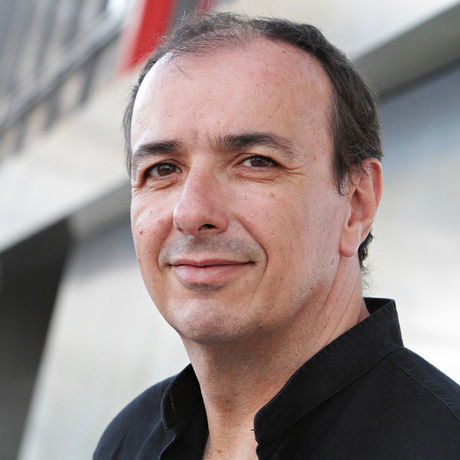
Esteban Hernández Jiménez es periodista. En la actualidad trabaja para el diario El Confidencial, donde es jefe de Alma, Corazón y Vida, la sección que abarca entre otras temáticas el análisis de los cambios socioeconómicos que se están produciendo.
Ha colaborado en periódicos como La Vanguardia o El Mundo, y en un buen número de revistas culturales, además de haber ejercido como abogado. Escribe para El suplemento Cultura/s de La Vanguardia.
Es autor de El fin de la clase media y recientemente ha publicado Nosotros o el caos: así es la derecha que viene, un libro en el que analiza el conservadurismo actual en la empresa y la política.
Favorite quotes from this talk
Photos from this talk See all

Hosted by
Soulsight
Salustiano Olózaga, 5 - 3º derecha
Madrid, Madrid Spain 28001
Date
Partners
Soulsight. Design Strategy
Yorokobu
Rockwear Estudio de Serigrafía
OMBIP
Fotógrafo Heriberto Noguera
Videographer Antonio Redondo