Each newsletter will feature a Miami-based creative individual sharing their craft with the world. Today we spotlight Dr. Shireen Rahimi.
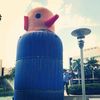
Dr. Rahimi is an Iranian/American award-winning underwater filmmaker, photographer, marine anthropologist, freediver, and National Geographic Explorer. As a marine anthropologist, Shireen studies how people make sense of, interact with, and adapt to changing oceans. While studying for her PhD, Shireen realized that her films were effective in getting people to care about ocean conservation. Upon completing her degree in 2020, she started Lightpalace and began her career as a professional filmmaker, infusing her scientific expertise into all of her work.
With Lightpalace, Shireen has been featured as a contributor on National Geographic Sharkfest, was named Nautica’s newest ocean conservation Wavemaker, and has had her work featured in The Miami Herald, National Geographic, Sierra Magazine, The New Tropic, and film festivals around the word. With her team of some of Miami’s brightest creatives, Lightpalace delivers high-end production services, helping their clients bring compelling and memorable visual stories to life.
As a marine anthropologist, how do you describe your personal connection to the ocean and marine life?
As a marine anthropologist, I study how everyday people relate to and adapt to a rapidly changing ocean. That could mean freediving with spearfishers in The Bahamas, diving for trash on a coral reef with children in Cuba, or listening to an indigenous Polynesian elder describe their mythological understandings of the water cycle. In this work, I have to be utterly present, both with my study participants and the ocean itself, paying attention to the significant and unremarkable details that make up an ocean-oriented life. The moment a fisher sticks his knife into the brain of a fish and the life leaves its eyes, the tender movements of a coral farmer’s hands as she tends to her underwater garden, or the way my skin tingles and I can’t help but smile after coming up from a deep freedive…my personal relationship with the ocean is a kaleidoscope of these shared moments. It’s also one of dependency–I can’t go more than three days without swimming in the ocean before I feel like something is missing in my life.
How does your scientific work inform your creative process, and vice versa?
I infuse science into almost anything I create, even my most abstract work. I love the undeniable rigor that science adds to any creative project–it’s like a weapon that I can use to defend the legitimacy of the work and its potential for impact. Science needs art to communicate its importance into the hearts of everyday people, and art needs science to help it drive social change more effectively. They are beautifully compatible.

What prompted you to move to Miami from California, and has the city influenced your work?
When I was getting into marine science during my undergrad, I remember seeing a video of a healthy coral reef in Cuba. Learning that they had some of the healthiest remaining coral reefs in the Caribbean and the complex sociopolitical reasons behind this, I immediately fell in love with the idea of working there. I applied to only one Ph.D. program: the Abess Center at the University of Miami under NatGeo Explorer, cave diver, and cultural anthropologist Dr. Kenny Broad (everyone told me to find an advisor I could look to as a role model, and this guy was a total weirdo, so it seemed like a good fit). I worked in Cuba for two years, studying the impact that Obama’s opening might have on the island’s reefs. Then Trump came into office, my research permits fell through, and I pivoted to complete my dissertation in The Bahamas.
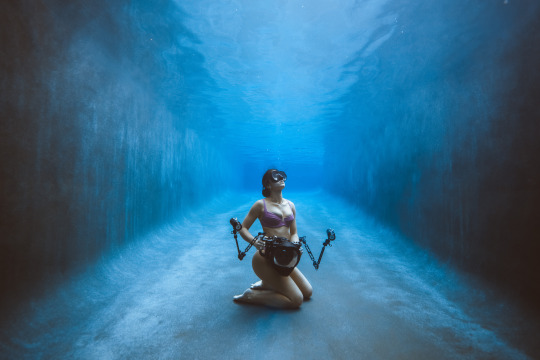
I tried to move back to California after my Ph.D., but I kept being drawn back to Miami. The city has definitely influenced my aesthetic: lots of blues, pinks, deep yellows, and a global feel. Miami has allowed me to develop my underwater photography practice–when conditions are right, I have a massive photo studio in my backyard: the ocean. To have that right off the shores of Miami, a diverse, global, vibrant, sub-tropical metropolis on the frontlines of climate change– there’s nowhere else quite like it.
Why did you start Lightpalace? And what is the significance of the name?
I started Lightpalace in 2020 after I finished my Ph.D. in the first summer of the pandemic. I was always terrified at the idea of starting my own production company. I knew how hard it would be and how much work it takes to build something from scratch. My loved ones believed in me. They encouraged me, and reminded me that I had all the skills to start my own business, so why rely on someone else? I’m glad I did it because now I work on my own terms, and although I haven’t realized all my dreams, I’ve built something that I can sustain myself with, which allows me to, for the most part, create freely and from the heart.
I named the company “Lightpalace” as a reference to the way light moves through water to create prismatic light waves, the way light moves through all life on Earth to create more life, and homage to mid-century Iranian mirror mosaic work that covers the walls of Iran’s most iconic palaces. It was more than a year after I named the company that my dad was reading me a Farsi poem, which mentioned a “palace of light.” He told me that the “palace of light” motif in Persian poetry symbolizes the dwelling of truth. The purpose of my work, as with all art and science, is to highlight and amplify the truth. It was one of those special moments.
What projects are you most proud of to date?
There are very few projects that I’m really proud of because, as an artist, I’m still finding my voice and developing my craft. But one of them has to be the short film called “Niyayesh” or “نییایش.” It’s a piece I put together documenting my mom’s journey from Iran to America, using footage from my grandfather’s 16mm film camera footage of 1970s Iran, my family’s camcorder footage from the 90s and early 2000’s in the U.S. I made it for her one mothers day. When I showed it to her, we sat there, watched it together, and cried the entire time. I haven’t been able to make anything so emotionally impactful since, but it’s my goal to bring that level of emotional impact to all of my creative work.
How does your Iranian heritage inform your work?
As a dual-national Iranian/American woman, growing up in California sometimes felt isolating. As a result, I love co-creating with people who similarly have felt left out of the dominant narrative, people from diverse cultural and indigenous perspectives. This is especially the case because I can’t cover these topics in my homeland, given the high risk of imprisonment.
Persian poetry and artistry have profoundly impacted not just my work but how I move through the world. In Iran, poetry is embedded in the fabric of Persian culture. When my father was young and wanted to leave home to travel the world, my grandfather recited to him no more than a couple of lines of a poem, infusing worlds of meaning into just a few words. When I was 18 and wanted to do the same, my dad recited to me the same exact poem, telling me that after all my travels, I would find that the answers to my questions lie within my heart. Poetry in Iran is inseparable from life.
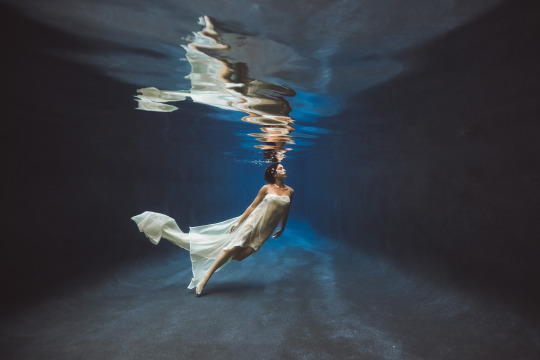
I infuse these ancient traditions into my work. My “Kaleidoscapes” series references Persian mirrorwork, and also the intricate and biluminous nature of life. Many words in Persian poetry carry multiple meanings, fractalated and laying on top of each other to create not just one message but a mosaic of meanings. The “Kaleidoscapes” suggest that you can say the same for nature. My upcoming short narrative underwater film, “Letter from the Age of Ecocide,” draws directly from ancient Persian texts to tell a story of grief and acceptance around climate anxiety. The Persian poets are my favorite therapists (Dr. Welch: if you’re reading this, you’re great too).
In the same topic, how are the devastating events in Iran impacting you and your work?
The last month has been emotionally exhausting. I can’t even imagine what it would be like to be in Iran for this.
I have been inspired by the courage of Iranians of all backgrounds, overwhelmed by how the entire nation and diaspora have come together in this revolution, saddened by the bloodshed, and encouraged by international support. I was always proud of my people, but to see young schoolgirls flipping off the Supreme Leader in their classrooms and taking to the streets as if they were part of some badass school field trip is shockingly impressive. And the support from Iranians in the U.S. has been really cool to see. I’ve connected with more Iranians in Miami than ever before by attending events and protests, and I’ve grown closer to the Iranian friends I already have. Many non-Iranian friends have reached out to me, asking how they can help. It shows that humanity is one big tree–if one of the leaves fall, the rest feel it.
As a dual-national, my ability to travel back and forth to Iran has always been tenuous. The regime highly targets dual nationals as political pawns. They will accuse you of espionage and put you in prison for years, just in case you will serve as useful leverage in negotiations with the West. Being listed as a National Geographic Explorer online exposes me to some risk, even if I don’t enter the country with a camera. Iran is very sensitive to environmentalists because they know their conservation track record is horrendous given many corrupt dam projects leading to widespread droughts, and the near extinction of the Asiatic cheetah. So if I had any hope to return, my internet advocacy during this revolution might have been the final nail in the coffin. This has been difficult to come to terms with.
At the same time, not going to Iran is an act of resistance against the regime. Their persecution and murder of their women, children, and brightest political and environmental minds is disgusting. A former classmate of mine, Canadian dual-national Niloufar Bayani, is facing a 10-year sentence in Evin Prison (the prison where fire and explosions took place this past weekend), for her camera trap work on the endangered Asiatic cheetah. She has been tortured and sexually harassed and held in solitary confinement for eight months. She has seven years left in her sentence. This is how the Iranian regime treats conservation biologists.
For a long time, I kept my environmental work and my cultural identity separate–I couldn’t think of an organic way to meld the two. These events have awakened a new, burning motivation in me to incorporate the voices of my oppressed brothers and sisters in every way I can. I started “Letter from the Age of Ecocide” long before this revolution began, but it couldn’t have come to fruition at a better time.
What do you wish more people knew about what is happening in Iran?
I cannot speak for what it’s like to be on the ground in Iran right now. Or even to live there long-term (I’ve only ever visited for months at a time). But in the time I have spent there, I’ve seen firsthand what it’s like to be treated as a second class citizen in your own homeland. When I was eight years old, I was chastised for not wearing my headscarf properly at the airport. When I was 18, I wasn’t allowed to enter a government building until I removed my nail polish. Every aspect of your life there is policed, and it is exhausting. It has made me so grateful for our freedoms here. I don’t have to be afraid of being imprisoned for speaking my mind on an Instagram post.
I want everyone to know that what’s going on in Iran isn’t only important to Iran or Iranians, it should matter to everyone. It’s an assault on democracy, women’s rights, and human rights. If we don’t stand up against it, we are sending the message that we will not be outraged if the same human rights abuses are inflicted upon us. We have to stand up for Ukraine, Iran, Palestine, and all the countries facing oppression from internal and outside powers.
Two very effective things you can do to help the situation in Iran are 1) contact your representatives. You can go to the following link to find their contact info and a prepared statement: https://lightpalaceproductions.com/iran and 2) continue to post on social media using the hashtags #mahsa_amini #opiran #iranrevolution #womenlifefreedom. Attention spans are alarmingly short these days, and we need to send the message to our elected leaders (and the mainstream media) that we’re serious about this and that we demand action to support the Iranian people.
What are the best places to go freediving in Miami?
If you don’t have access to a boat, I love going out to the South Point Jetty and the Jose Cuervo Tiki Bar, which is just out from the third lifeguard stand by the swim buoy on South Beach. The rocks at South point attract lots of fish, rays, squid, and often manatees! It doesn’t get super deep, but if you take a dive flag out, you can go past the swim buoy into deeper waters. Just be careful not to get swept into the cut. Jose Cuervo also is about 20ft or so (as deep as it gets off of the beach, really), but it’s a cool structure, and there are always lots of fish, tarpon, and sometimes nurse sharks. As always, make sure you go out on a day with low wind and waves, so there’s good visibility!
What are you currently working on, and where can people learn more about it?
I’ve been pulling all-nighters working on this short film, “Letter from the Age of Ecocide.” It’s a film about a woman’s journey through the stages of grief as she begins to lose her underwater home. This film is intended not to educate or diagnose the climate crisis, but to illustrate healthy coping with the emotional dissonance that pervades our lives in this age of ecological destruction. I wanted to send the message that we must maintain focus in our fight for environmental justice, and simultaneously accept our brave new world and the aspects of it that we cannot control.
The film is supported by Oolite Arts, Ivan Williams of Eco ArtLab, and The Standard Hotel Miami Beach. You can catch it at Oolite Arts’ public screening on December 15th at Soundscape Park on Miami Beach. You can learn more about the film here: ageofecocide.com
And you can follow along with my work here: instagram.com/lightpalac.e